
Warehousing & contract logistics
Warehousing and Contract Logistics in Belgium
Storage, labeling, packaging, cold chain and distribution support for shippers who need more than a truck — coordinated from our Lochristi base.
The scope
What contract logistics actually covers
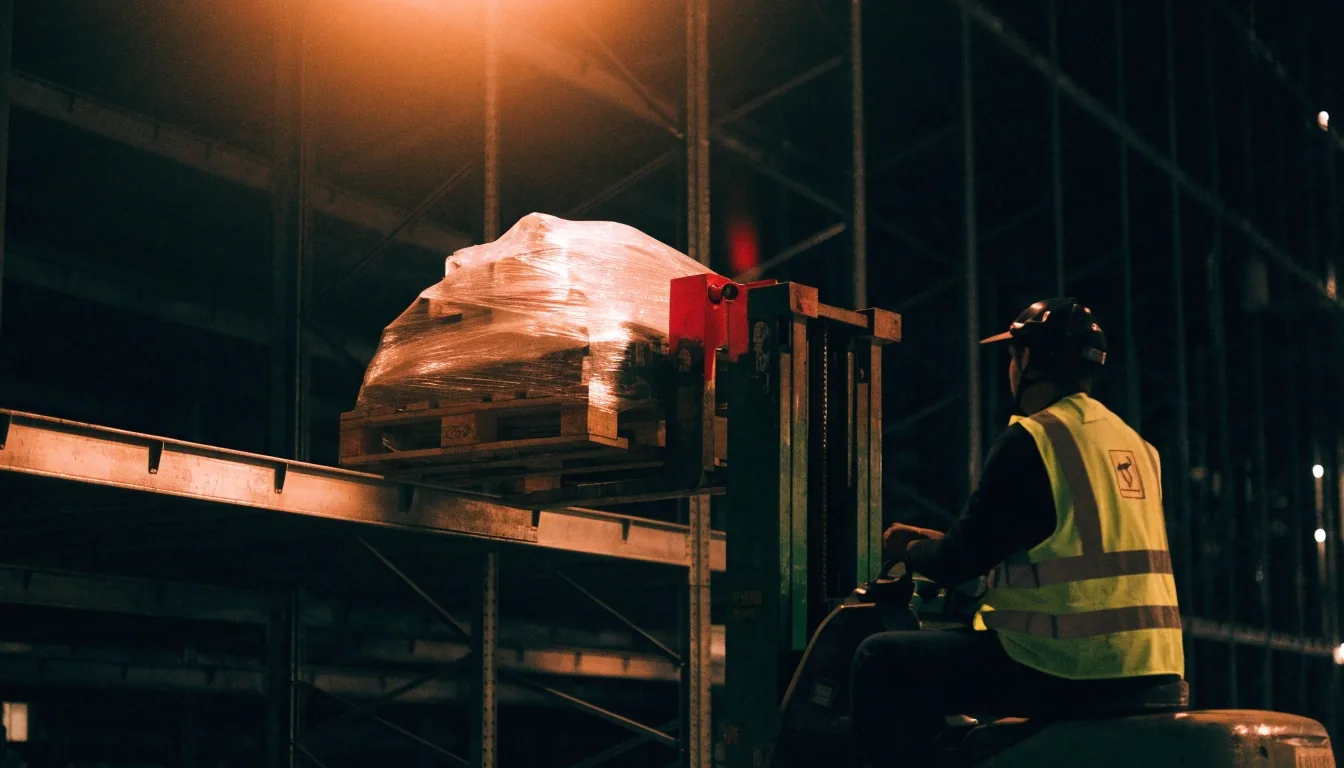
Contract logistics is the arrangement where a provider runs part of your supply chain rather than just moving a truck. In Belgium that typically means warehousing and distribution services, plus transport solutions and the coordination between them. Your goods sit in a facility, and the provider handles receiving, storage, order picking, packing, dispatch and the documentation around each step. The scope is agreed in advance. It is not the same as renting rack space and doing everything yourself.
- Receiving & put-away Inbound checked against the delivery note, pallets placed into an agreed storage position.
- Storage by type Ambient racking, block stacking, or a temperature-controlled zone, chosen per product.
- Order picking Full pallet, case, or single unit — the pick method follows how your customers order.
- Labeling & repacking Value-added work done at the rack, so one inbound shipment can serve several markets.
- Dispatch & documentation Outbound loading, paperwork prepared per destination, handover to the road leg.
Storage, and when it stops being enough
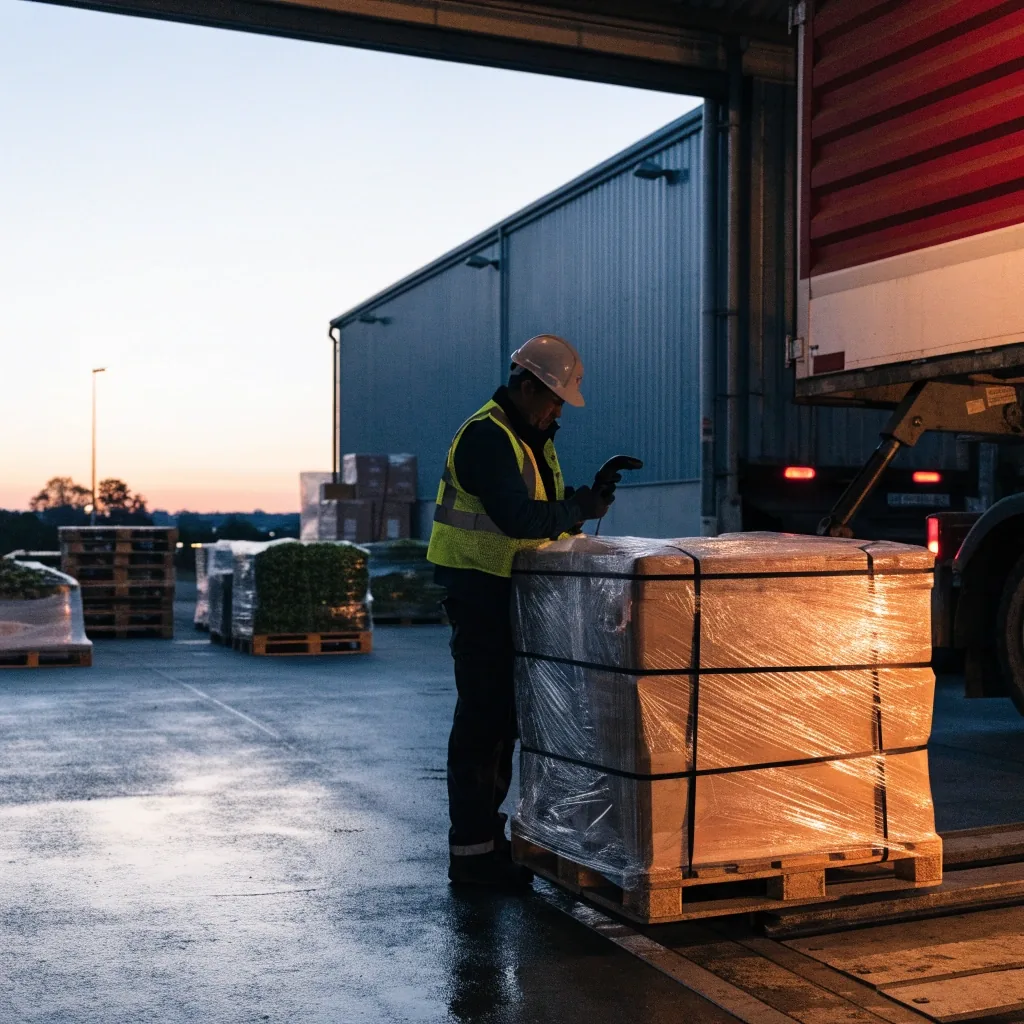
Dock staging
Pallet positions and the orders behind them
Stock earns its shelf when orders arrive smaller or more often than your supplier ships.
Renting pallet positions is straightforward. The question is whether that is all you need. Storage on its own rarely justifies the cost of a Belgian facility unless your customers order in smaller or more frequent quantities than your supplier ships. When that is the case, holding stock locally and distributing from it shortens delivery times and reduces your transport spend on small orders. When it is not, you are paying for a warehouse you could replace with a well-planned groupage schedule.
A useful first check is order arithmetic: how many lines go out per week, how heavy each one is, and how far apart the delivery addresses sit. If those numbers point at frequent, light, multi-address shipping, a Belgian stock position is doing real work. If they point at one full trailer per month to a single destination, it is not — and the honest answer is a transport plan rather than a rack contract.
Value-added work
Labeling and packaging for the destination market
Goods often need work before they can be sold in the destination country. Labeling to local regulatory or retail requirements is routine: language, content declarations, barcodes, batch and expiry marking. Repacking covers the case where your supplier ships in bulk and your customer buys in retail units. Both are done at the warehouse rather than at the factory, which means the same inbound shipment can serve several markets without a separate production run for each.
The practical questions are how many label variants you carry, whether the artwork is fixed or changes per season, and how much of the work can be planned before the pallet is opened. Tasks that repeat predictably can be scheduled alongside the pick; one-off jobs tend to interrupt the flow and cost more per unit.
- Language and content declarations applied per market
- Barcodes, batch and expiry marking
- Bulk-to-retail repacking, priced per unit handled

Inventory visibility and warehouse management
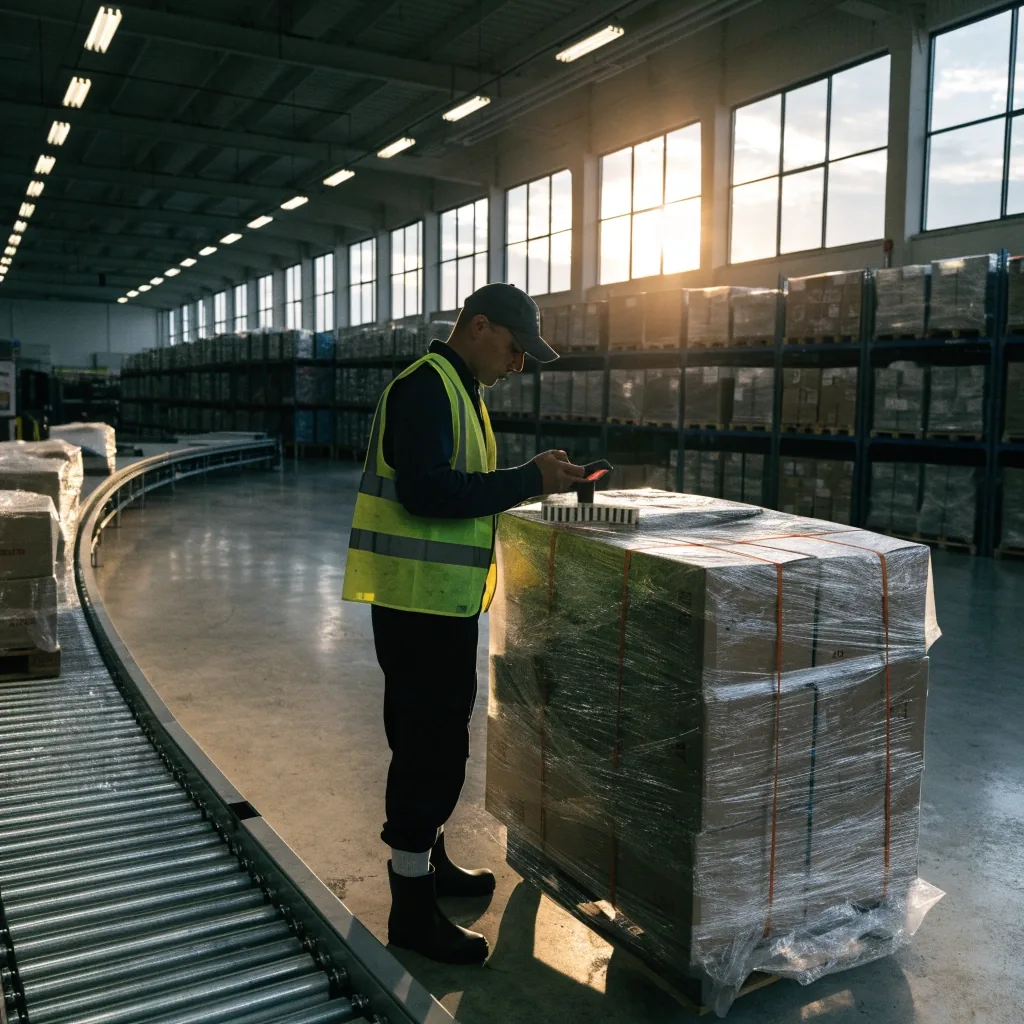
You should be able to check your stock without phoning anyone. Warehouse management systems track what arrived, what is on the shelf, what has been picked and what has left, and that record is what your replenishment decisions rest on. IT integration matters here: if the warehouse system talks to your order system, counts stay aligned. If it does not, someone reconciles spreadsheets, and errors accumulate. Ask how the counts are shared and how often.
What the record has to answer
- How many units of each line are physically in the building right now Stock on hand
- Which lines are allocated to open orders and cannot be promised twice Allocation
- What left today, on which vehicle, and against which reference Outbound
- Where the count and the physical shelf disagree, and why Adjustments
Distribution from a Belgian stock point
Distribution is where the warehouse and the transport plan meet. Stock held in Belgium can serve the Netherlands, Luxembourg, northern France and Germany within a day by road, which is a large part of why the country hosts so much logistics activity. The practical questions are how many delivery addresses you have, how often they order, and whether the orders are big enough to consolidate into efficient runs. One stock position with a planned delivery round usually beats shipping each order separately from origin.
Reach from Lochristi
Next-day road coverage from one stock position
- Belgium Domestic
- Netherlands & Luxembourg Same or next day
- Northern France Next day
- Western Germany Next day
Coverage assumes a planned delivery round and standard road conditions, not a dedicated express run.
Tell us the addresses and the order rhythm, and we will say whether a planned round beats shipping from origin.
Request a distribution plan
Chilled & frozen
Cold chain: chilled and frozen storage
Temperature-controlled storage is a different discipline from ambient. Chilled and frozen goods need a documented range, monitored equipment and a loading process that does not let the temperature drift. The same applies to the trailer: it is pre-cooled before loading, and the loading itself needs to be quick enough to hold the range. If your product is temperature-sensitive, tell us the required range at the enquiry stage, because it determines both the storage type and the vehicle.
Ask about cold chain storageReverse logistics and returns
Returns are part of retail and e-commerce, and they are easier to handle when the warehouse is already receiving your goods. Reverse logistics covers the flow back: collecting returned items, inspecting them, deciding whether they can be restocked, and processing the ones that cannot. Doing this at a Belgian facility rather than at origin keeps the loop short. It also gives you a record of return reasons, which is more useful than a pile of unopened parcels.
Inbound return
Received and logged
The parcel arrives back at the same dock that shipped it, and the return reference is recorded against the original order.
Inspection
Restock or set aside
Each item is checked against the condition you accept as resellable, then returned to stock or routed to a quarantine area.
Reporting
Reasons, not guesses
Return reasons are grouped and shared on a schedule you set, so patterns show up before they become a cost line.
Getting a warehouse set up without overcommitting
Start with the volume you can actually forecast, not the volume you hope for. A facility sized for a peak season sits half empty the rest of the year, and you pay for the space either way. It is usually better to begin with a smaller footprint and a clear scope: receiving, storage, one or two value-added tasks and dispatch. Add the labeling line or the second temperature zone once the flow is steady and the counts are reliable.
- Step one Write down the volume you can forecast for the next two quarters, in pallets and in outbound lines per week.
- Step two Agree the scope in writing: receiving, storage, which value-added tasks, and how dispatch is triggered.
- Step three Decide how stock counts are shared and how often, before the first pallet arrives.
- Step four Add the second temperature zone or the labeling line only once the base flow runs without corrections.
This is also the order we use when we cost a setup: the scope first, then the space it needs, then the transport plan around it.
Questions shippers ask
Straight answers to the points that usually decide whether a Belgian stock position is worth setting up.
Do we have to commit to a long contract to start? +
Start with the volume you can forecast and a scope you can describe. We would rather set up a smaller footprint with a clear task list and extend it when the flow proves steady than size a facility for a peak that arrives twice a year.
What do you need from us to price a warehousing setup? +
Inbound volume and frequency, how many outbound lines go out per week, the number of delivery addresses, whether any value-added work is involved, and the temperature range if your product is sensitive. Those five points cover most of what changes the cost.
Can the warehouse system talk to our order system? +
That depends on what your order system exposes and how often you need the counts. It is worth settling before the first pallet arrives, because a shared count and a reconciled spreadsheet are very different jobs.
Where are you based, and what are your hours? +
Raveschoot 22, 9080 Lochristi, Belgium. We are reachable Monday to Friday, 09:00–18:00, on 998202598 or at [email protected].
Do you handle returns if we also ship from your warehouse? +
Yes — returns are easier to process where the goods already arrive. Inbound returns are logged, inspected, and either restocked or set aside, with the reasons grouped so you can see patterns.
Northern Sky Logistics — Lochristi
What does your stock position actually need to do?
Bring the order rhythm, the delivery addresses and any temperature or labeling requirement. We will tell you whether a Belgian warehouse earns its cost for your flow, and what the transport plan looks like if it does not.
-
Address
Raveschoot 22, 9080 Lochristi, Belgium
-
Phone
998202598
-
Email
-
Hours
Monday–Friday, 09:00–18:00