

Specialised freight planning
Project Cargo and Specialised Freight Planning
Overheight machinery, temperature-controlled pharmaceuticals, out-of-gauge components and one-off project moves each bring their own constraints — and those constraints decide the plan.
Why specialised cargo is planned, not booked
A standard pallet shipment can be quoted from four numbers: origin, destination, weight and a service level. A specialised one usually cannot, because the limiting factor is the cargo itself rather than the distance between two postcodes. A low-bed trailer load may need a route survey to confirm bridge heights, tunnel clearances and turning radii on the way in and out. A refrigerated consignment needs the temperature range agreed and the trailer pre-cooled before the doors open at the loading dock. A project cargo move may need permits, an escort and a booked slot at the receiving site.
Planning first is not caution for its own sake. It is the step that turns an estimate into a quote you can hold us to: which trailer, which route, which documents, which loading window. When we ask about dimensions before we ask about price, that is the reason.
What planning actually checks
- Trailer type that physically fits the load
- Route feasibility, permits and any escort requirement
- Temperature range, pre-cooling and door-to-door timing
- Customs status and any temporary admission arrangement
One-off and oversized
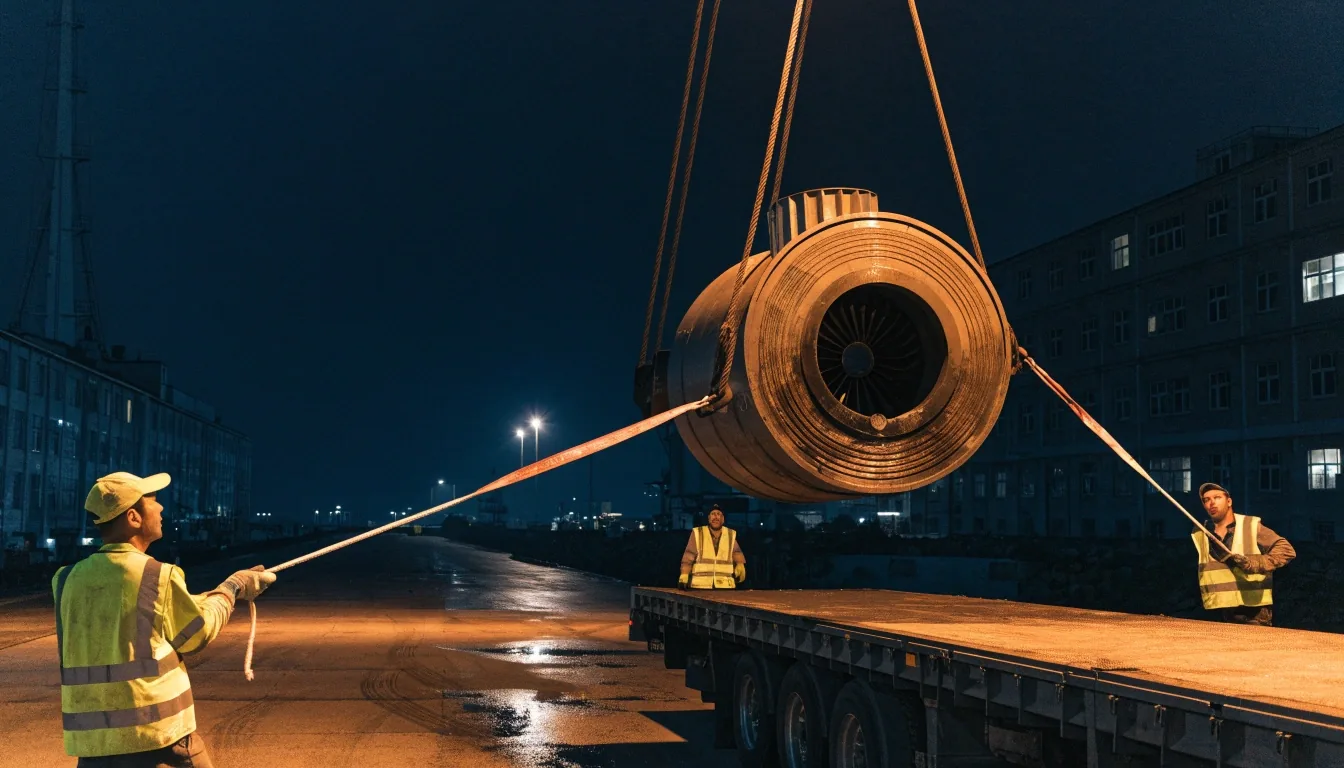
Project cargo: one-off and oversized
Project cargo covers the movements that do not repeat: industrial plant, turbine components, production line equipment, oversized structures. These shipments are usually tied to an installation schedule, which means the transport window is fixed by someone else's plan — the crane is booked, the site team is standing by, and the trailer has to be there.
The work starts with dimensions, weights and lifting points, then moves to route feasibility and any permit requirements. Antwerp-Bruges handles a significant share of project cargo flows into and out of Belgium, and the port is often the starting point for the inland leg toward Limburg, Ghent or the Brussels ring.
Chilled and frozen
Refrigerated transport: chilled and frozen
Refrigerated transport covers goods that need a controlled temperature range in transit, from chilled food to temperature-sensitive pharmaceutical products. The trailer is set to the required range before loading, not adjusted after, and the loading itself needs to be quick enough that the temperature does not drift between the dock and the first mile.
Door-to-door timing matters more here than on ambient freight, because a delay at a delivery point is a temperature event, not just a schedule slip. Tell us the range and the tolerance at the enquiry stage — a chilled range of two to eight degrees and a frozen range near minus eighteen are different plans, with different trailers and different loading habits.
If the range is not agreed before loading, the trailer arrives pre-cooled to a guess, and the whole chain runs on that guess.

Out-of-gauge loads
Low-bed trailers and out-of-gauge loads
Low-bed trailers carry cargo that exceeds standard height or needs a lower loading platform: construction machinery, industrial equipment, vehicles, and the odd piece that simply will not fit through a standard curtain-sider. Loading and securing take longer than a curtain-sider, and the cargo needs to be assessed before the trailer is assigned. This is where a route survey earns its cost.
Two workstreams, one plan
Combining specialised handling with customs
Specialised cargo often crosses borders, which means the customs position needs as much attention as the trailer. The two workstreams have to be planned together, because a permit that arrives after clearance, or a clearance that lags behind the trailer, both stop the shipment at the same barrier.
How we handle customs and cross-border freightAn oversized industrial component arriving from outside the EU needs a declaration and possibly a temporary admission arrangement if it is returning after installation. A refrigerated pharmaceutical shipment may face additional documentation requirements on top of the temperature plan. In both cases the paperwork has to be ready while the trailer is being secured, not after it is on the road.
Practically, that means we ask for the customs status of the goods at the same time as the dimensions. For shipments into Belgium via Antwerp-Bruges, Rotterdam or Zeebrugge, we plan the inland leg around the clearance window rather than treating the two as separate bookings. If you already work with a customs broker, we will coordinate with them directly.
What we check before dispatch
Permit lead times, clearance position, escort requirement and the delivery site's receiving window are all lined up against the same calendar day, so nothing arrives at the border before its paperwork does.
What to send us
What we need to quote a specialised move
Send the following and we can assess the trailer type, the route and the documentation, and give you a plan rather than an estimate. If the move turns out to be routine after all, we will tell you and quote it as a standard load.
-
Dimensions and weight
Length, width, height and total weight of the piece, including any packaging or transport frame. If the load is irregular, the widest and highest points are the ones that matter.
-
Loading and unloading
What handling equipment is available at both ends — crane, forklift, loading dock, ramp. This decides whether we bring our own lifting gear or work with what is on site.
-
Delivery date and window
The date the load needs to arrive, and how flexible that date is. For project cargo, the installation schedule usually drives this and a fixed window is normal.
-
Temperature range
If the goods are chilled or frozen, the required range and the tolerance. Include whether the load can be pre-cooled before loading or has to be handled on a short window.
-
Customs status
Where the goods are coming from, their customs status, and whether they will return after installation. This decides whether a temporary admission arrangement is part of the plan.
-
Photographs
Photographs help more than descriptions for anything unusual. A few shots of the piece, its base and any lifting points tell us more than a paragraph of text.
A specialised move is not a bigger standard move. It is a plan built backwards from the constraint.
How we approach non-standard freight at Northern Sky Logistics
The specialised fleet
Trailer types we plan specialised freight around
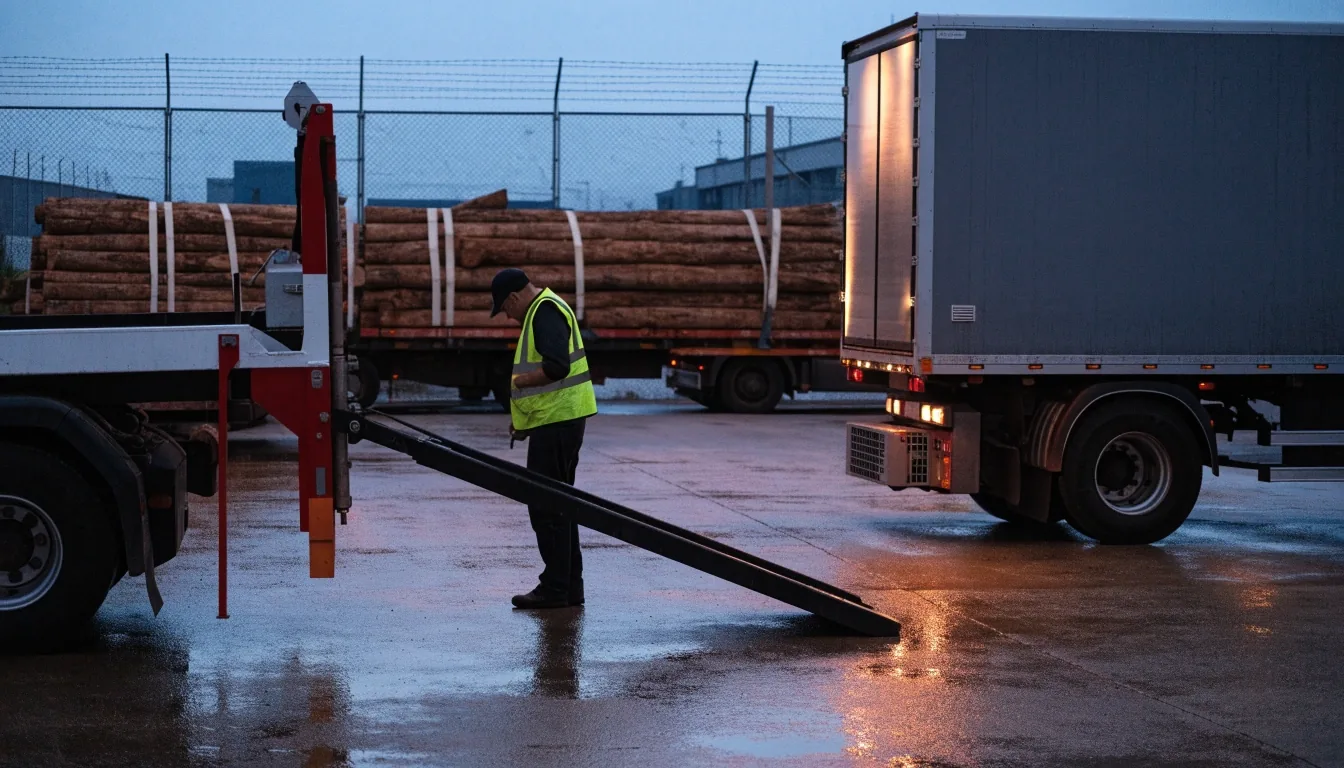
Equipment matched to the load
Low-bed, refrigerated and flatbed trailers staged at the yard
The trailer is chosen after the load is assessed, not before. Height, width, weight distribution and temperature needs each pull the plan toward a different platform.
Load types at a glance
How each specialised load is assessed
Practical questions
Questions about specialised freight planning
How early should I contact you about a project cargo move? +
As soon as the installation schedule is known. Route surveys, permits and any escort arrangement need lead time, and a fixed installation window usually means the transport plan has to be locked before the load is ready. Getting the dimensions and weights to us early lets us confirm feasibility before you commit to a date with your site team.
What temperature range can a refrigerated trailer hold? +
The range is set to the goods, not the other way around. Chilled food typically moves in a narrow band just above freezing, frozen goods sit well below zero, and pharmaceutical consignments usually specify a tighter tolerance than either. Tell us the range and the acceptable drift at the enquiry stage so the right trailer is assigned and pre-cooled before loading begins.
Do I need a route survey for a low-bed trailer load? +
Not always, but overheight and overwidth loads usually need one. A survey confirms bridge and tunnel clearances, turning radii and access at both ends before the trailer is committed. For a load that fits standard limits, the check is quick. For anything out of gauge, the survey is what makes the quote accurate rather than optimistic.
Can you coordinate customs for a specialised shipment? +
Yes. Specialised freight often crosses borders, so the customs position is planned alongside the trailer. That can include a declaration for goods arriving from outside the EU, or a temporary admission arrangement if an oversized component is returning after installation. If you already work with a customs broker, we coordinate with them directly so the trailer is not waiting on paperwork.
What if the move turns out to be routine after all? +
We will tell you, and quote it as a standard load. The point of assessing a shipment is to find out what it actually needs. If the dimensions fit a standard trailer and no permit or temperature plan is required, you save the specialised planning and we move it on the normal groupage or full-truck schedule.
Next step
Tell us what the load is and we will tell you how to move it
Send dimensions, weight, loading and unloading method, delivery date, temperature range if it applies, customs status and photographs if you have them. We will come back with a plan — trailer type, route, documentation — rather than a number pulled from the air.
Northern Sky Logistics · Lochristi
Raveschoot 22, 9080 Lochristi, Belgium · Mon–Fri 09:00–18:00
Phone 998202598 · [email protected]