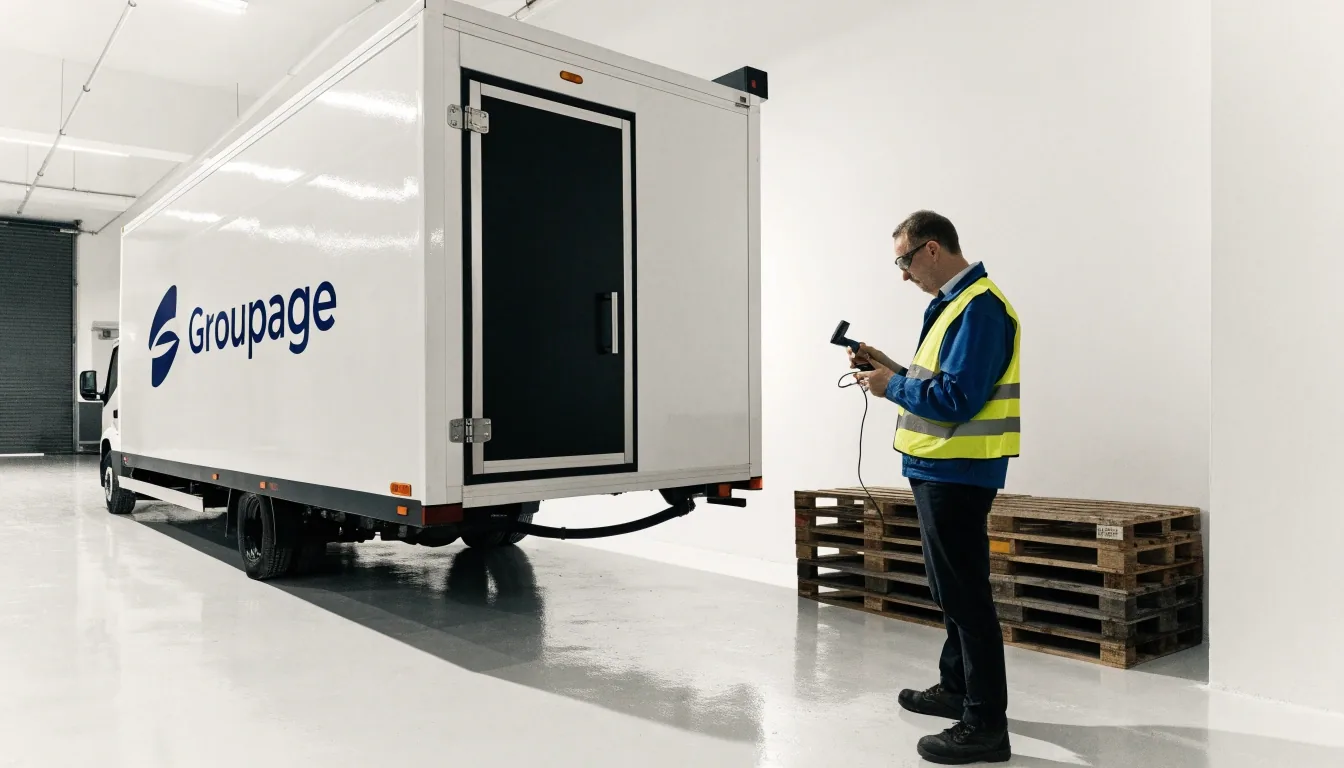
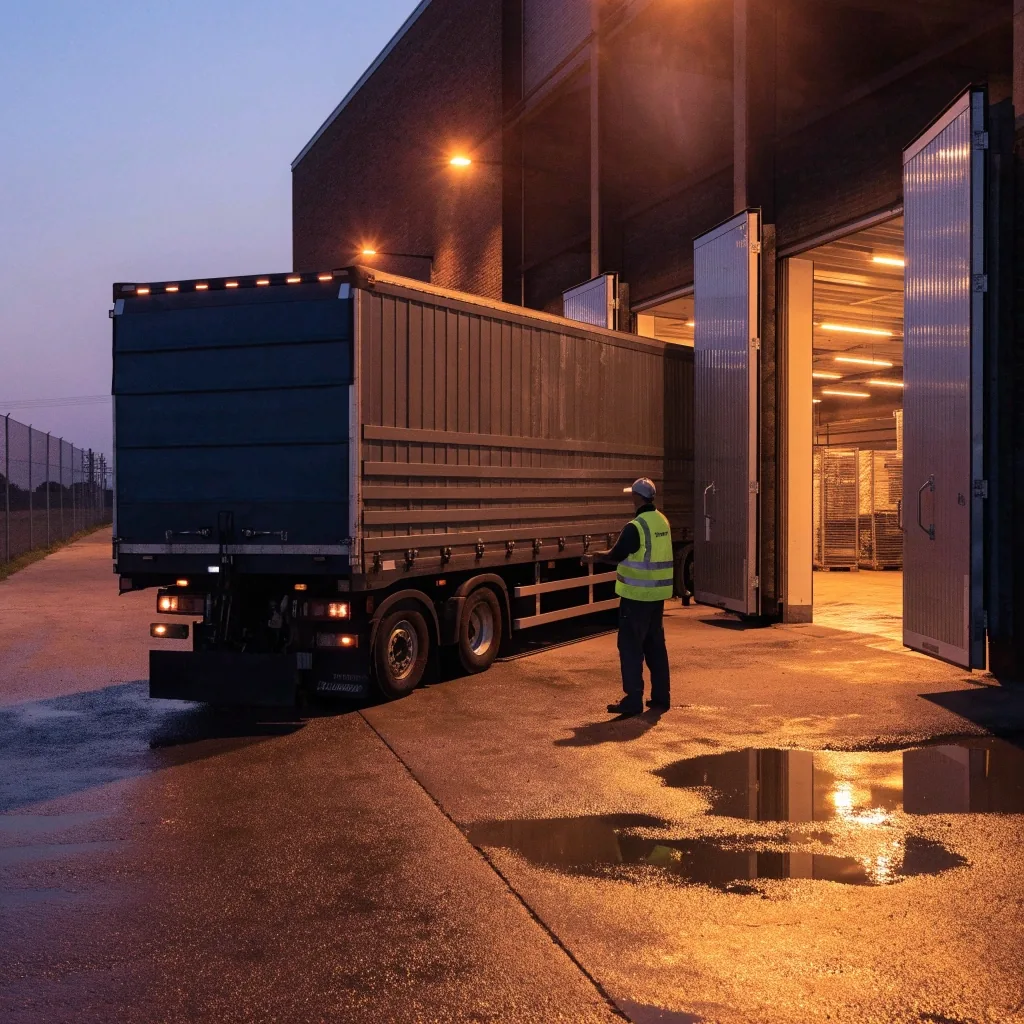
Night cross-dock yard near Lochristi with trailers parked under sodium lights on wet asphalt

Road freight and contract logistics · Lochristi, Belgium

Road Freight and Logistics from Lochristi

Groupage, full truckload, warehousing and customs coordination for shippers across Belgium and the wider Benelux. Tell us what is moving and where it has to be.

Which mode fits your load

Not sure whether your pallets need groupage, LTL or a whole trailer?

We work backwards from your delivery date and compare the options before recommending one.

See transport modes

What we do

What we do, in plain terms

Based at Raveschoot 22, Lochristi

Halfway between Ghent and Antwerp, close to the E17 toward Antwerp and the E40 running east toward Brussels and Liège.

We move pallets, part loads and full trailers by road, and we coordinate the warehouse and customs steps that sit on either side of the truck.

A shipment from a food producer in East Flanders to a distributor in the Netherlands might need collection, groupage consolidation, a delivery slot and a CMR document. A machine tool bound for a buyer in Germany might need a low-bed trailer and an export declaration. Same company, different jobs.

Tell us what is moving and where it has to be, and we will tell you which of the options below applies. Nothing on this page is a fixed package: the shipment decides the mode, not the other way round.

On the road

Groupage, LTL and full truckload

Collection at your dock, consolidation where it helps, direct trailers where it does not.

Around the truck

Warehousing and customs coordination

Belgian stock points, labeling and repacking, declarations filed alongside the movement.

Choosing a mode

Four ways your freight can move

Each mode trades cost against speed and handling. Read the four panels below as a shortlist, then check the full comparison if your lane is not obvious.

Shared trailer

Groupage

Shipments from several customers share one vehicle, so four or five pallets a week to the same region pay for a share of a trailer rather than a whole one. The trade-off is timing: a groupage trailer fills on a schedule, so your pallet may wait a day at a consolidation point.

Groupage detail
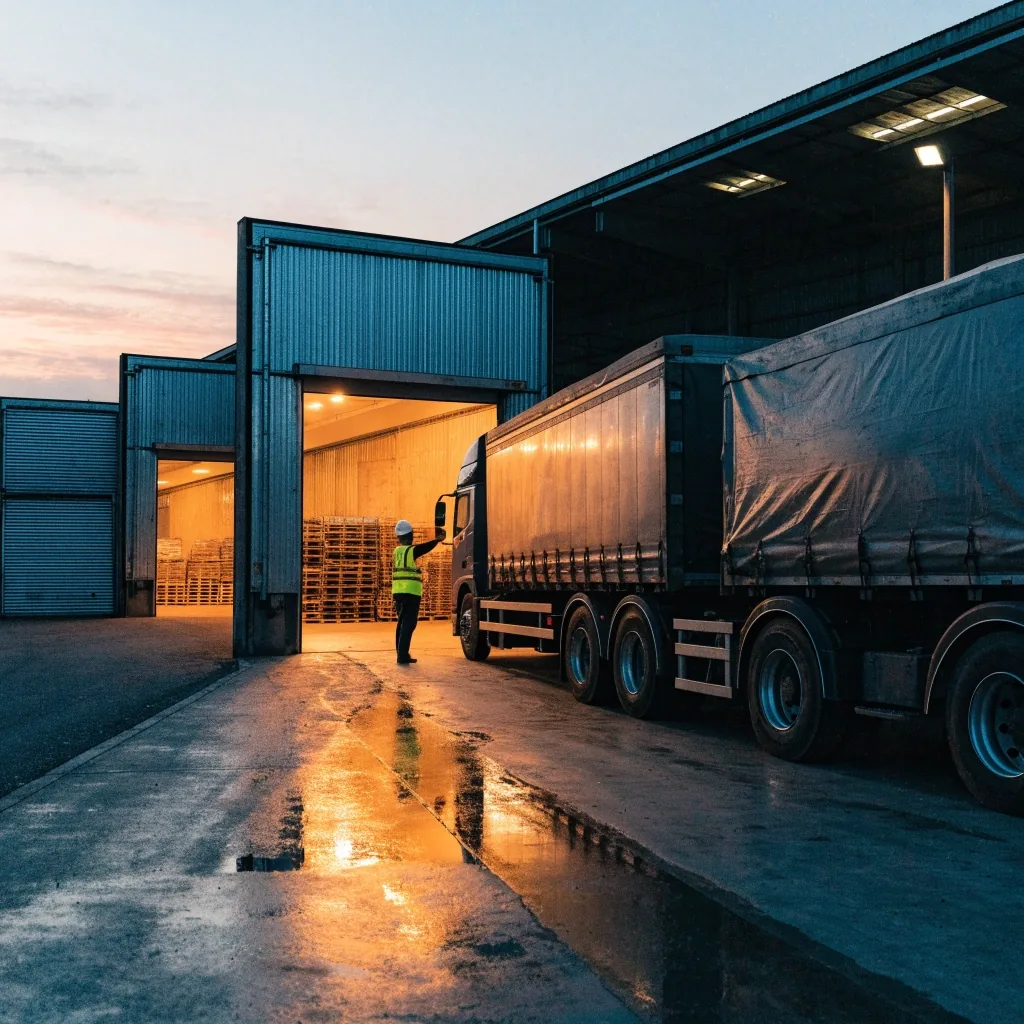
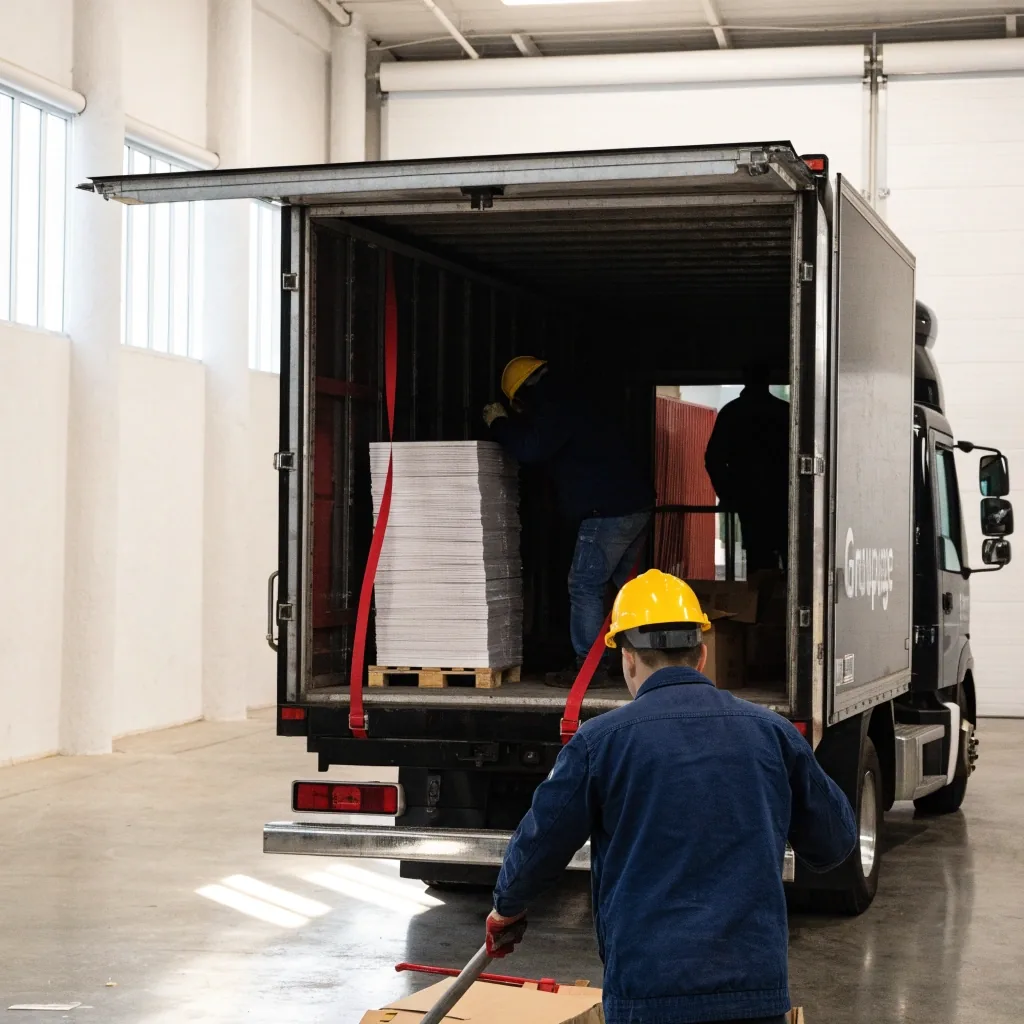
Dedicated vehicle

Full truckload

You book the trailer and it runs from your loading dock to the destination without being unpacked in between. That matters for fragile goods, high-value B2B freight and anything on a fixed appointment. If your consignment fills more than roughly half a trailer, compare FTL against groupage before assuming consolidation is cheaper.

Full truckload detail

Direct part load

Less-than-truckload

The freight still shares a vehicle, but LTL is usually handled as a direct part load with fewer handling points than a classic groupage network. Belgian shippers use it when a shipment is too big for a parcel network and too small for FTL, and when the goods should not be re-sorted more than necessary.

LTL detail

Sea, air, road

Multimodal

Sea or air carries the long leg and road does the collection and final delivery. Antwerp-Bruges is the core gateway for container, breakbulk, RoRo and project cargo, and Brussels Airport handles express, pharma and time-critical movements. Shortsea is worth comparing on some European lanes.

Multimodal detail

Where Belgian freight actually changes hands

Antwerp quay at night with container stacks under cranes and harbour lights on wet water

Sea gateway

Antwerp-Bruges

Container, breakbulk, RoRo and project cargo flows, and the reason so many Benelux supply chains start on a quay before they start on a road.

Airport cargo apron at night with freight pallets staged under apron floodlights

Air node

Brussels Airport

Belgium's main air-freight hub, used for express, pharma, e-commerce and time-critical movements that cannot wait for a trailer.

Warehouse aisle at night with tall racking rows and a forklift silhouette under ceiling lamps

Belgian stock point

Contract warehousing

Labeling, repacking and picking from one stock position, so your customers can order in the quantities they actually want.

Warehousing and distribution support

Storage is the easy part. The work that actually helps is what happens around it: labeling to the destination market's requirements, repacking for a specific retail format, picking and distributing to several delivery addresses from one stock position, and keeping inventory counts you can check.

We coordinate contract logistics for shippers who need a Belgian stock point rather than a truck. If you are weighing up whether warehousing in Belgium adds value beyond simple storage, the usual test is whether your customers order in smaller quantities than your supplier ships.

See warehousing options
  • Labeling for the destination market

    Retail-ready labels applied before dispatch, so goods arrive in the format the receiving store or distributor expects.

  • Repacking for a retail format

    Case packs, mixed pallets and display formats built from the same inbound stock instead of a second production run.

  • Distribution to several addresses

    One inbound container, several outbound deliveries, planned as one route instead of separate bookings.

  • Inventory counts you can check

    Stock records kept current, so a reorder decision is based on what is actually on the rack, not on what was booked in.

Customs coordination through Antwerp and Brussels

Customs is part of the transport job, not a separate administrative chore you deal with afterwards. Antwerp is a major point where import and export documentation and clearance matter, and cross-border EU and non-EU flows make customs expertise commercially important for Belgian shippers.

We coordinate declarations and clearance alongside the physical movement, so a container arriving at Antwerp or a pallet flying into Brussels Airport does not sit waiting while paperwork is sorted out. Get the documentation right the first time and the transport plan holds.

Ask about customs coordination
Import

Goods arriving from outside the EU need an import declaration and a duty assessment before they leave the terminal.

Antwerp
Export

Outbound freight needs an export declaration filed against the right goods code before the trailer is sealed.

EU-wide
Within the EU

Goods move freely, but origin, excise and product-specific rules can still apply to what is on the pallet.

Benelux
Air cargo

Airfreight paperwork is filed with the booking, so a pallet does not sit on the apron while clearance catches up.

Brussels

Which of these applies to you depends on origin and destination. If you are unsure, describe the movement and we will tell you what documentation the lane needs.

Refrigerated and specialised cargo

Not every load fits a standard curtain-sider. These shipments are planned individually because the constraint is usually the cargo itself, not the distance.

Refrigerated transport

Chilled and frozen goods carried inside a controlled temperature range, agreed before loading. The trailer is pre-cooled and the delivery slot matters more than it does for ambient freight, because loading and unloading have to be quick enough to hold that range.

Low-bed and out-of-gauge

Overheight or oversized machinery that will not fit a standard trailer. Height, width and axle weight decide the equipment, and the loading method is settled before the vehicle is ordered.

Project cargo

Multi-part consignments for a single site, where a route survey comes before anyone quotes it. Access roads, turning circles and crane positions all shape the plan as much as the kilometres do.

How we choose between modes

We start with your delivery date, then work backwards. Only then do we compare groupage, LTL, FTL or a multimodal route. That order matters, because picking a mode first and fitting the shipment to it is how delays get built into a plan.

Our comparison page sets out the criteria we use, so you can see the reasoning rather than just the recommendation. Ask which one applies to your lane, because the answer changes both transit time and how many times your pallet gets touched.

Compare transport modes
  1. Step one

    Fix the delivery date

    A fixed unloading slot at the other end rules out some modes immediately, however cheap they look on paper.

  2. Step two

    Measure volume and weight

    Pallets, loading metres or kilos, and whether the goods can be stacked on top of each other without damage.

  3. Step three

    Check handling conditions

    Temperature control, fragile surfaces, tail-lift or crane at either end, and how many times the freight may be re-sorted.

  4. Step four

    Compare the routes

    Groupage, LTL, FTL or multimodal, priced against the window you actually need, not against the cheapest abstract lane.

Picking a mode first and fitting the shipment to it is how delays get built into a plan.

How we plan a lane

Getting started: what to send us

The fastest way to get a useful answer is to send us five things. With that, we can tell you which mode applies and what the customs position looks like. If you are new to exporting, say so. There is no penalty for asking a basic question, and it is cheaper to fix a plan than a shipment stuck at a border.

Collection address

Delivery address

What is moving

How much of it

When it must arrive

Temperature or documents

Common mistakes we see

None of these are expensive to avoid. They are expensive to discover after the truck has left.

  • Treating the transport booking as the last step rather than an early one.

  • Assuming EU membership removes all paperwork. It does not remove customs status, origin or excise questions.

  • Booking on price alone for a lane where the delivery window is the real constraint.

Working with shippers across Benelux

Our routes concentrate on Belgium, the Netherlands and Luxembourg, with regular links into northern France and Germany. That regional focus is deliberate. Groupage only works when there is enough freight on a lane to fill a trailer, and we would rather run fewer lanes well than promise coverage we cannot consolidate.

If your shipment sits outside our regular corridors, we will say so and suggest how to structure it instead. Being honest about a lane we do not run is more useful to you than a quote we cannot hold.

Address

Raveschoot 22
9080 Lochristi, Belgium

Phone

998202598

Monday–Friday · 09:00–18:00

Next step

Send the five details and we will tell you which mode applies.

Call, email or use the contact page. We will come back with the mode, the customs position and what to prepare before the truck arrives.

Request a quote

Questions shippers ask us

Short answers to the six things that come up most often when a Belgian shipper is planning a first or a new lane.

What transport mode is fastest for shipments in and out of Belgium?

For most European destinations, a dedicated full truckload is fastest because it runs direct with no consolidation stop. Air freight through Brussels Airport is faster still for intercontinental or urgent high-value cargo, but the cost is a different order of magnitude. Groupage trades a day or so for a lower price.

How do groupage and full truckload differ for European freight?

Groupage combines your pallets with other customers' freight in one trailer, so you pay for the space you use and accept a scheduled departure. Full truckload gives you the whole trailer and a direct route. The crossover point depends on volume, stacking and how tight your delivery window is.

Which Belgian hubs are strongest for sea, air and road logistics?

Antwerp-Bruges handles container, breakbulk, RoRo and project cargo flows. Brussels Airport is the main air-freight node, used for express, pharma and e-commerce. For road, the E17 and E40 corridors through Ghent, Antwerp, Brussels and Liège carry most Benelux and EU traffic.

What customs steps matter for shipments moving through Belgium?

It depends on origin and destination. Imports from outside the EU need an import declaration and duty assessment; exports need an export declaration. Within the EU, goods move freely but origin, excise and specific product rules can still apply. We coordinate the documentation with the transport booking.

How is temperature-controlled cargo handled in Belgium?

Refrigerated trailers are pre-cooled before loading and the temperature range is agreed in advance. Loading and unloading need to be quick enough to hold that range, which is why delivery slots matter more for cold chain than for ambient freight.

When does warehousing in Belgium add value beyond simple storage?

When your customers order in smaller or more frequent quantities than your supplier ships, or when you need to label, repack or distribute to several addresses from one stock position. Storage on its own rarely justifies the cost.

Start here

Tell us what is moving and where it has to be.

A collection address, a delivery address, what is moving, how much of it and when it has to arrive. That is enough for us to name the mode and flag the customs position before anything is booked.

Ready to compare the options?

Request a quote About Northern Sky Logistics