Night warehouse aisle with racking receding under sodium ceiling lamps and a parked forklift

Road freight, groupage and multimodal

Comparing groupage, truckload and multimodal freight

A pallet of components and a 22-tonne machine can travel the same road on the same day and still need completely different arrangements. Here is how the modes actually compare.

Decision plate

What is your constraint — appointment, temperature or volume?

Tell us the one thing that cannot move, and the shortlist gets shorter before anyone quotes.

Request a mode comparison

Before the mode

Start with the constraint, not the mode

Before comparing modes, identify what cannot move. Is there a fixed delivery appointment? Does the cargo need a temperature range? Can it be stacked, or does it need floor space? Is it overheight? The answers eliminate options quickly.

A shipment with a fixed 8am unloading slot on a Friday is not a groupage candidate, whatever the price difference says. Work out the constraint first and the mode choice becomes much shorter. In practice most of the disagreements we see between a shipper and a forwarder are not about price at all — they are about a constraint that was never stated out loud at the quoting stage.

Fixed appointment

A hard unloading window usually rules out consolidation, because the trailer leaves when it is full enough, not when you need it.

Temperature or handling range

Reefer capacity, pharma rules and fragile goods narrow the field fast, and each extra touch is a place where something can go wrong.

Stackability and dimensions

Non-stackable, overheight or awkwardly shaped freight changes the arithmetic more than the tariff table does.

The mode wall

Four ways to move the same load

Each panel covers one option, what it costs you, and the shipper it suits. Read them side by side, not in sequence.

Shared trailer

Groupage

You pay for the linear metres or pallet positions you occupy on a trailer shared with other shippers. Common across Benelux and European road freight.

Cost: per pallet position. Trade-off: departure depends on how full the trailer gets.

Part load

Less-than-truckload

Your freight shares a vehicle but travels as a direct part load rather than through a consolidation network, so it gets touched fewer times.

Cost: more than groupage, less than a full trailer. Trade-off: fewer handling points for fragile or high-value goods.

Dedicated vehicle

Full truckload

The trailer is yours from collection to delivery. Nothing is unpacked, nothing is re-sorted, and transit time is predictable with no intermediate stops.

Cost: per vehicle. Trade-off: below roughly half a trailer, the per-unit maths stops working in your favour.

Changing vehicle

Multimodal and shortsea

Sea or rail carries the main leg and road handles collection and final delivery. Worth pricing where a road-only route is long or driver hours are tight.

Cost: competitive on the right lane. Trade-off: every transhipment is a point where time can be lost.

Container stacks at an Antwerp quay under crane silhouettes and harbour lights at night

Deep-sea gateway

Sea freight through Antwerp-Bruges

Air corridor

Air freight through Brussels Airport

Brussels Airport is Belgium's main international airport and a major air-freight node, supporting express, pharma, e-commerce and time-critical cargo movements. It connects Belgium to global air corridors and is the sensible option for high-value or urgent shipments where road and sea cannot meet the deadline.

It is also the most expensive per kilo by a wide margin. The honest use case is a shipment whose delay cost exceeds the air premium, not a general preference for speed. If the deadline is a morning slot tomorrow and the cargo value is modest, a direct full truckload across the Benelux often arrives inside the same window at a fraction of the cost — which is why we price both before recommending either.

Consolidation economics

Groupage: what you gain and what you trade away

Groupage combines smaller shipments from multiple customers into one vehicle, and it is common across Benelux and broader European road freight. You pay for the linear metres or pallet positions you occupy, which is the obvious benefit for a shipper with two or three pallets a week on a steady lane.

The cost is schedule dependency. The trailer departs when it is full enough, and your goods may be handled at a hub in between. Ask what the departure frequency is on your specific lane before you commit — a twice-weekly service to one city and a daily service to another behave like different products, even under the same name.

Ask about a specific lane
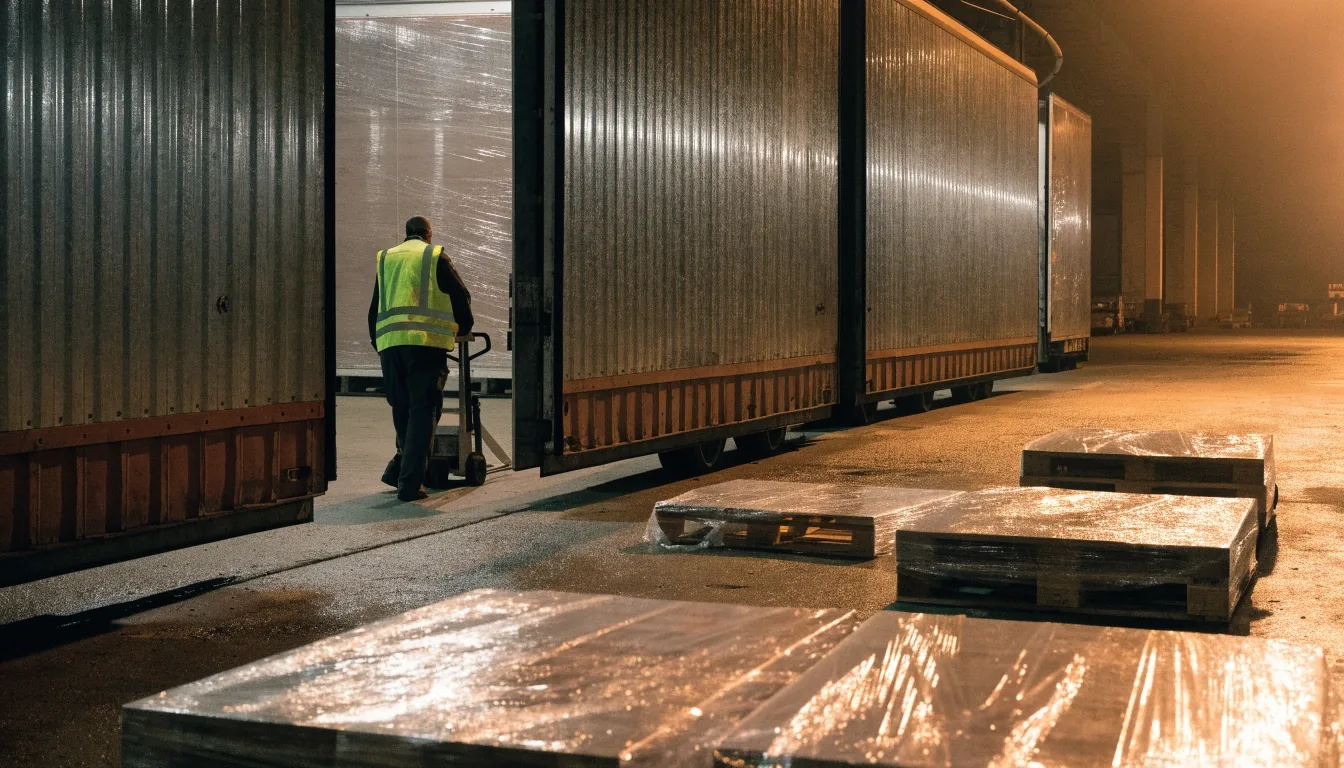
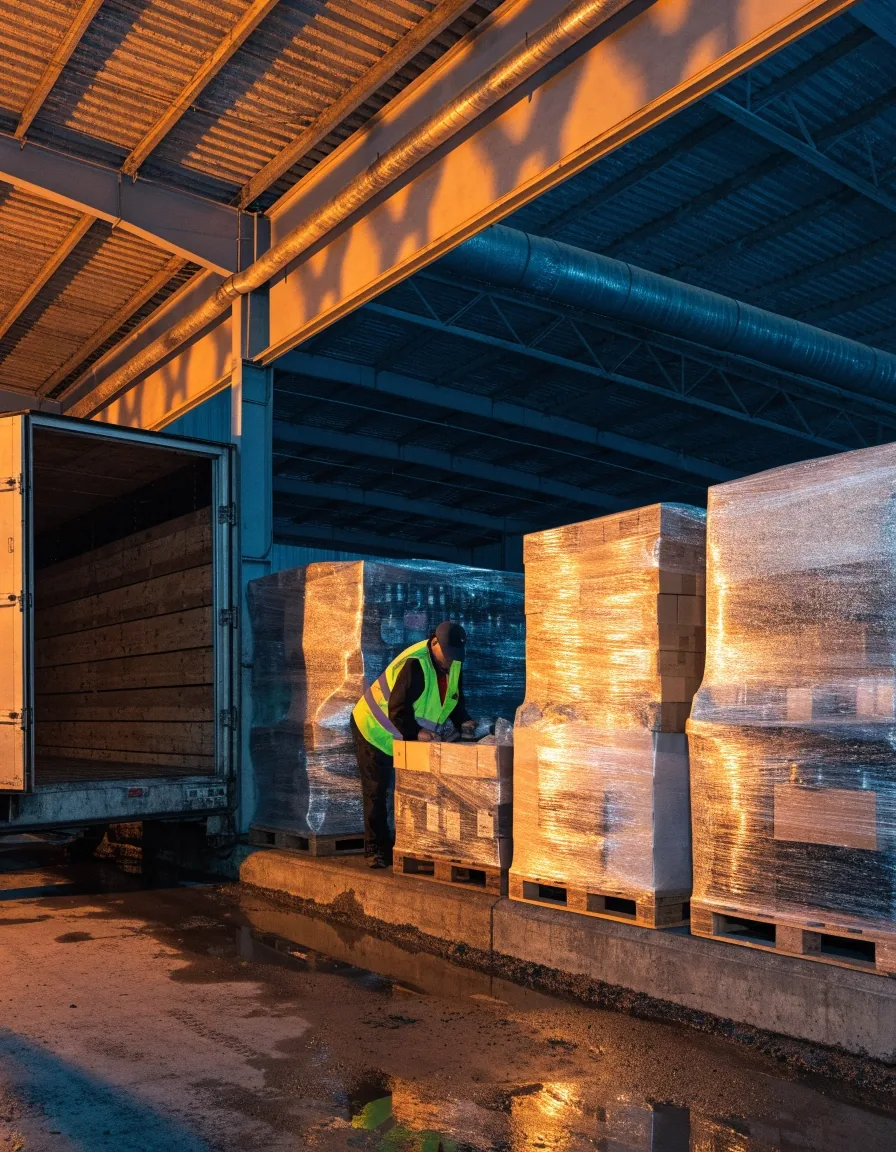
Mixed groupage pallets staged on a loading dock at night beside an open trailer door

Side by side

How the modes compare on the things that matter

No single mode wins on everything, and any provider who says otherwise is selling one service. Use the rows below to find the option that matches your volume, your deadline and your budget — then ask for the two that fit, not the one you already had in mind.

Groupage

Wins on cost for small, flexible shipments with two or three pallets on a steady lane and no hard delivery window.

Watch the departure frequency

Less-than-truckload

Wins when you want fewer handling points at a middle price — six to twelve pallets of fragile or high-value freight that should not be re-stacked repeatedly.

Price it against groupage

Full truckload

Wins on transit time, security and simplicity once volume is high enough — direct, no re-sorting, and the cost per unit falls as you fill the trailer.

Best past half a trailer

Multimodal and shortsea

Wins on long European lanes where the schedule has slack — rail or sea carries the main leg and road does the first and last mile.

Needs buffer at each change

Air freight

Wins when the deadline is immovable and the cargo value supports the premium. Brussels Airport handles the express and time-critical flows.

Highest cost per kilo

Sea freight

Wins on deep-sea volume through Antwerp-Bruges. The onward leg from the terminal is almost always road, so plan the hinterland move early.

Default for deep-sea volume

Every mode is a trade between cost, control and calendar. The work is knowing which one you are buying.

From the Northern Sky dispatch desk, Lochristi

Where it goes wrong

Where shippers commonly get this wrong

Booking groupage for a fixed window

The most common mistake is booking groupage for a shipment that has a hard delivery window, then discovering the trailer departs two days later than expected. If the appointment is fixed, price the direct options first.

Paying for a trailer that is two-thirds empty

The second is paying for a full trailer on a load that fills a third of it, out of a vague sense that full truckload is more professional. Below roughly half a trailer, the per-unit arithmetic usually stops working in your favour.

Treating air as the default for anything urgent

The third is assuming air freight is the safe default for anything urgent, when a direct full truckload across the Benelux often arrives within the same window at a fraction of the cost. Urgency is a deadline, not a mode.

Common questions

Questions we hear before a mode is chosen

If your question is not here, the dispatch desk answers by phone or email during working hours.

How many pallets before full truckload is cheaper than groupage?

There is no fixed number that applies to every lane, because the groupage tariff per pallet position and the full trailer rate both move with distance, weight and season. The useful rule of thumb is that the crossover usually sits somewhere above half a trailer: once you are consistently filling more than that on a lane, ask for the dedicated vehicle price and compare it directly against the groupage total for the same consignment.

Is less-than-truckload worth it for six pallets?

Often yes, when the goods are fragile, high-value or awkward to re-stack. LTL normally costs more than groupage on the same lane and less than a full trailer, and the reason to pay the difference is fewer handling points. If your six pallets are shrink-wrapped components that survive a hub sort without complaint, groupage will usually be the better value. If they are finished goods in retail packaging, LTL is the option to price.

When does shortsea make sense from Belgium?

Shortsea is worth comparing on European lanes where a road-only route is long or where driver hours are tight, typically on routes that would otherwise run across several days of driving. The trade-off is transhipment: every change of vehicle is a point where time can be lost. On the right lane, with the right buffer in the schedule, it is competitive. On a next-day delivery, it usually is not.

Do you handle customs as part of the transport booking?

Cross-border movements need documentation prepared before the vehicle is loaded, not after it arrives at the border. We coordinate the customs steps alongside the transport booking so the paperwork and the truck are ready at the same time — you can read the full process on the customs and cross-border page before you book.

Other services

Where the mode decision lands next

Warehousing & contract logistics

Storage, cross-docking and contract handling for shipments that need a stop between production and the final delivery.

Warehousing and contract logistics

Customs & cross-border

How documentation, duties and border checks are prepared so the vehicle is not held at the crossing.

Customs and cross-border

Specialised cargo

Overheight, non-stackable and project loads that sit outside the standard mode arithmetic.

Specialised cargo
Trailer backed against a warehouse loading bay at night with light spilling onto wet asphalt

Next step

Send the load details and get two modes priced

Tell us the collection and delivery points, the volume and weight, and the one constraint that cannot move. We will come back with the modes that actually fit — not the one we prefer to sell. Dispatch answers Monday to Friday, 09:00–18:00, at 998202598 or [email protected].

Northern Sky Logistics, Raveschoot 22, 9080 Lochristi, Belgium.