
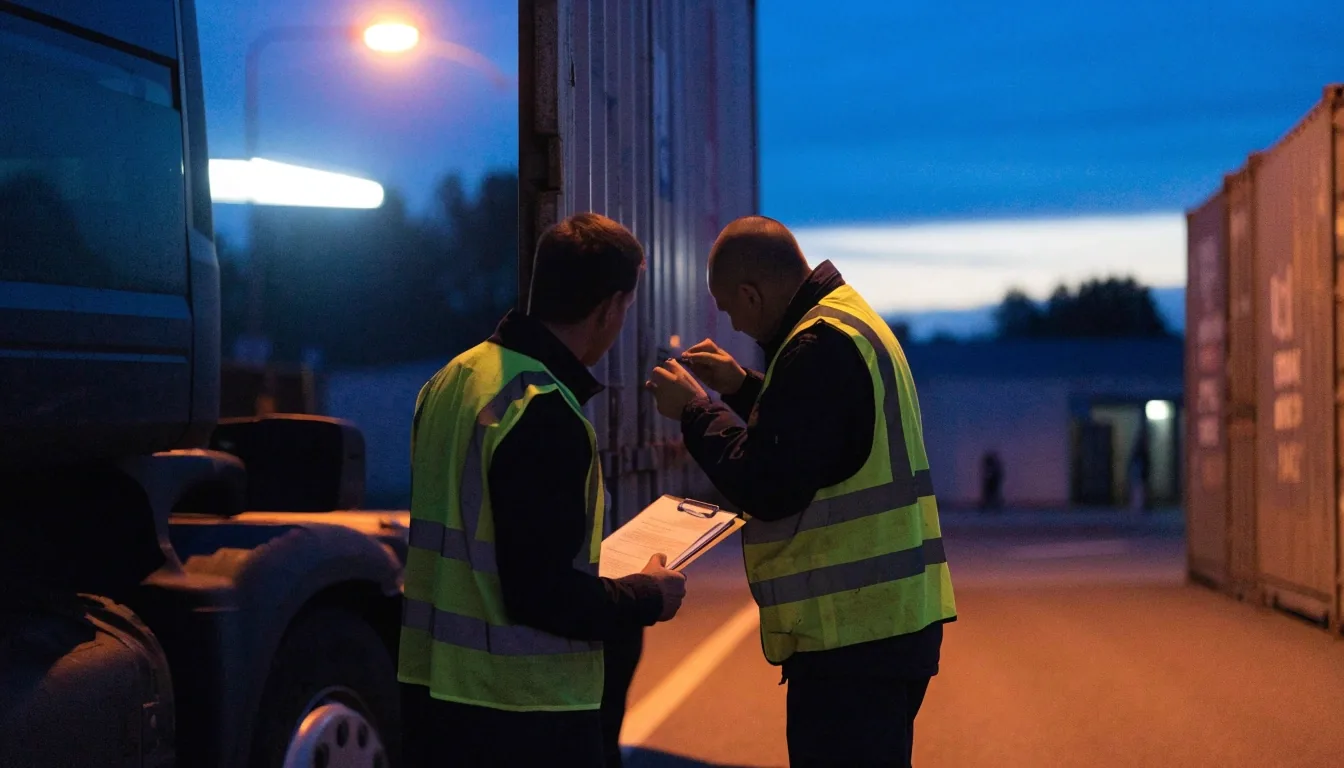
Antwerp and Brussels gateways
Customs Coordination and Cross-Border Freight
Clearance is part of the transport plan, not a formality added once the truck is booked. This page covers what import and export flows through Belgium actually require.
Which flow applies
EU pallet or a Swiss one — the difference is paperwork, not distance.
Tell us the origin, destination and commodity and we will confirm what has to be declared before the vehicle is dispatched.
Why readiness shows up in transit times
Customs readiness separates providers
Cross-border EU and non-EU flows make customs expertise commercially important, and it shows up in transit times rather than in invoices. A forwarder who treats clearance as a formality discovers the gap at the border, when the goods are already loaded and the clock is running. A forwarder who plans it has the declaration ready before the vehicle arrives.
The difference is not expertise in the abstract. It is whether someone checked the paperwork before dispatch. Belgian logistics content keeps returning to customs coordination alongside transport for a simple reason: a shipment that clears slowly costs the same in fuel and driver time whether the delay came from traffic or from a missing document.
Prepared in advance
Declaration drafted while the vessel or aircraft is still moving. Onward road leg booked at the same time as the clearance work.
Left to the border
Documents chased once the goods are loaded. Storage and demurrage charges begin while the file is still being assembled.
Import and export documentation
The paperwork that decides the duty rate
For imports from outside the EU you need an import declaration with a commodity code, a customs value and evidence of origin, and duty and VAT are assessed on that basis. Exports need an export declaration, and in some cases a licence or certificate. Within the EU goods move freely, but origin, excise and specific product rules still apply.
Import declaration with commodity code, customs value and evidence of origin
Duty and VAT are assessed on the declared value and origin.
Export declaration, plus a licence or certificate where the goods require one
Checked before booking, because a licence cannot be issued at the dock.
Goods move freely, but origin, excise and product-specific rules still apply
Excise goods and regulated product categories carry their own conditions.
The commodity code is the detail most often wrong on first attempts
It sets the duty rate, so it is worth settling before the first shipment rather than after.
Two gateways, two clocks
A container can wait. A pharma pallet cannot.
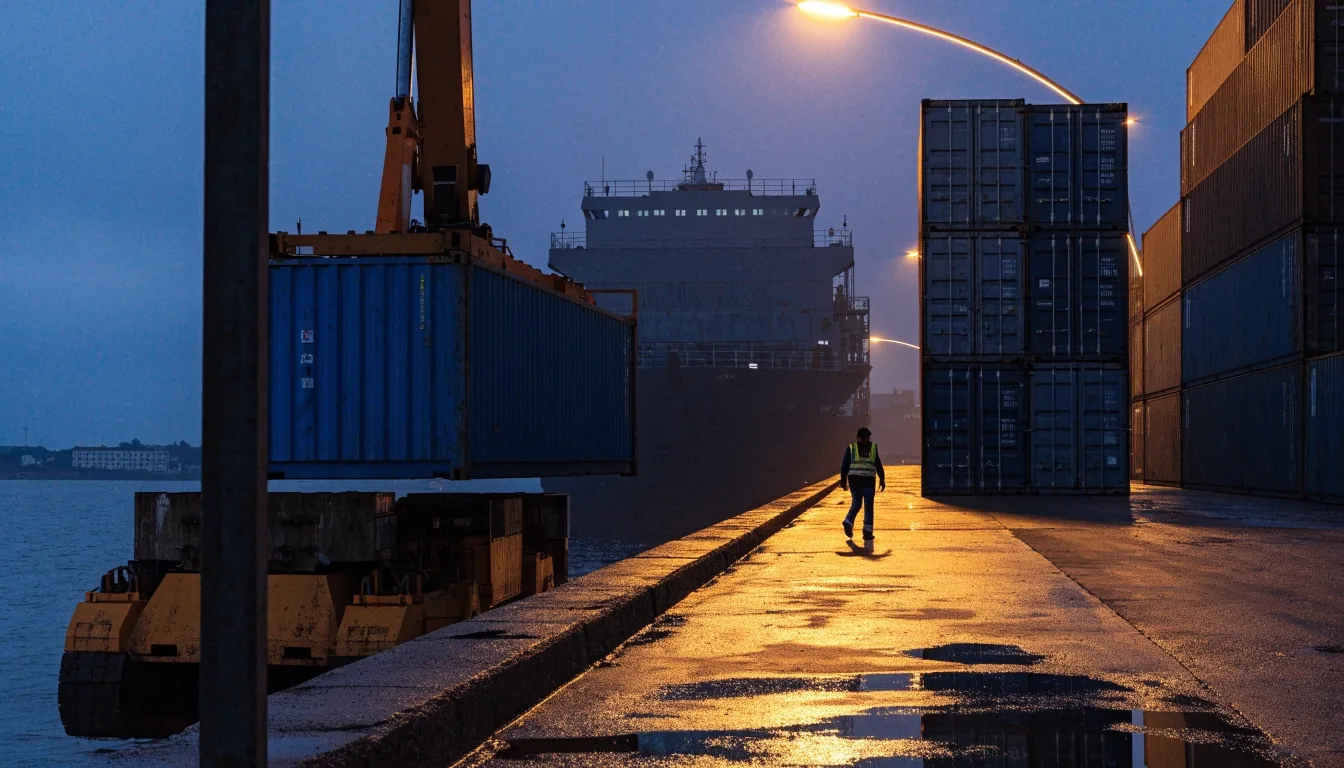
Antwerp
Discharge, declaration, release, onward leg
Terminal storage charges start accruing quickly when clearance stalls, which is why the file is built while the vessel is still at sea.
Moving through Antwerp
Where deep-sea paperwork lands
Antwerp is a major point where import and export documentation and clearance matter, and it handles a large share of Belgium's deep-sea container traffic. The practical sequence is that the container discharges, the declaration is lodged, and clearance releases the goods for onward movement or into a warehouse.
Coordinate the onward road leg at the same time as the declaration. If the release and the truck booking are handled separately, the container sits on the terminal while both sides wait for each other — and the storage clock keeps running.
- Commodity code and customs value confirmed before the vessel berths.
- Declaration lodged while the container is still on the water.
- Onward road leg booked in parallel, not after the release notice.
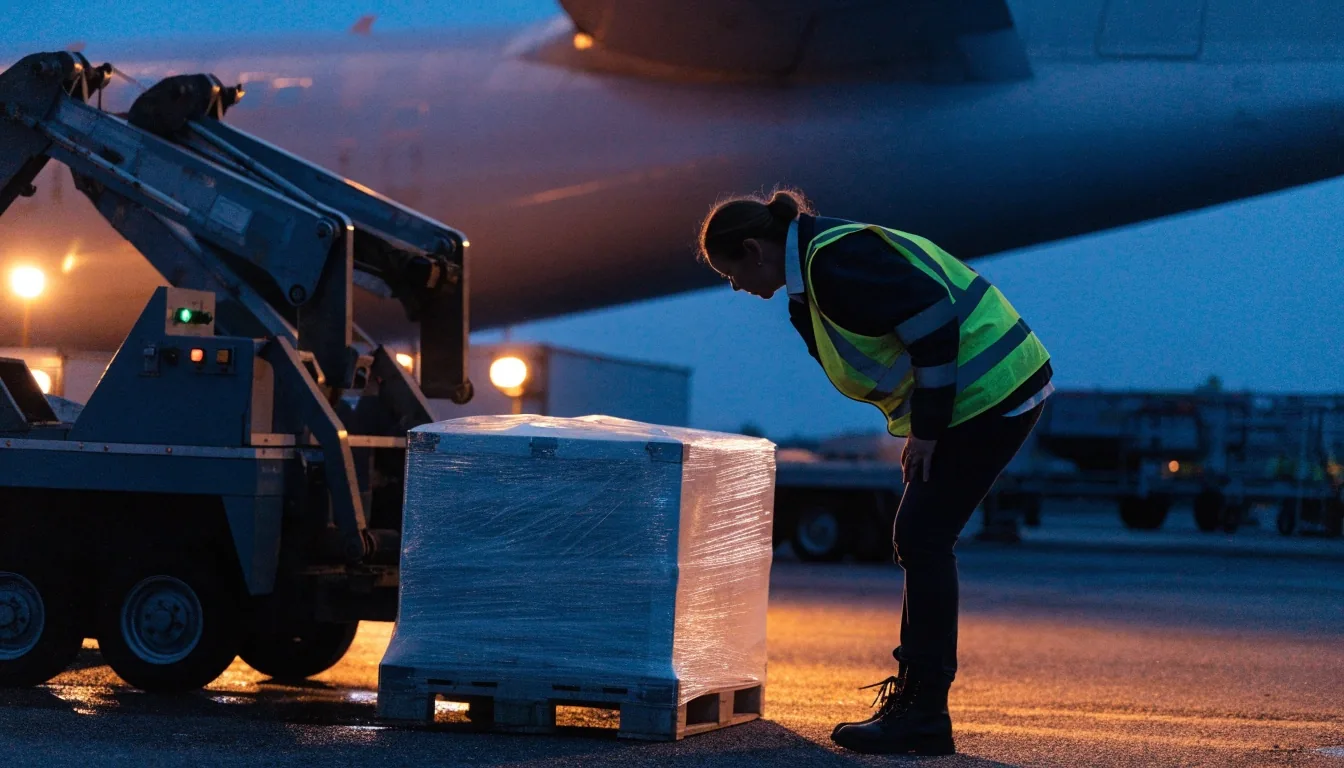
Brussels Airport
Higher value, lower tolerance for a slow clearance
Air freight benefits most from declarations prepared in advance — the requirements are broadly the same, the patience is not.
Brussels Airport handles air cargo alongside its passenger traffic, and air shipments tend to be higher value and more time-sensitive than sea freight. That changes the customs priority: a delay that would be an irritation on a container is a serious problem on a pharma consignment or an express e-commerce shipment.
Temperature-controlled and regulated categories bring their own documentation on top of the standard declaration, so the file is checked against the commodity rather than against a generic template. Where a certificate or licence applies, it is confirmed before the pallet build, not at acceptance.
Moving through Brussels Airport
Same documentation requirements, much less room for a stall
The customs work runs in parallel with the pallet build. Where the goods are time-critical, that parallelism is the whole point of the arrangement.
EU and non-EU flows in the same week
A pallet to Rotterdam is not a pallet to Zurich
Inside the customs union
Goods move freely across the border
A pallet from Lochristi to Rotterdam or to northern France does not need a customs declaration. The border is not a customs event. What still applies is origin, excise duty on certain goods, and product rules for regulated categories — so the booking confirms the commodity before the vehicle leaves.
Typical planning: transport booking and a commercial invoice. No declaration to lodge.
Outside the customs union
Short road journey, full customs process
Switzerland, Norway and the UK all sit outside the EU customs union, and each has its own requirements. A pallet to Switzerland does not travel like a pallet to Rotterdam, even though the road distance is short and the route is familiar. Export declaration, commodity code, value and origin, plus whatever the destination requires.
Typical planning: declaration drafted and onward leg booked before dispatch.
Keeping the two flows straight in your own planning is half the work. The other half is making sure the transport booking reflects which one applies before the vehicle is dispatched.
When a customs broker is worth it
The rules change. The codes are numerous.
Customs brokerage is a standard part of integrated logistics offers in Belgium for a reason: the rules change, the codes are numerous, and an error can hold up a shipment for longer than the transport took. If you ship occasionally, a broker handles the declarations as part of the transport arrangement and you do not maintain the expertise in-house. If you ship constantly and in volume, the calculation is different — and worth reviewing against your own filing costs.
What cannot be outsourced
Either way, the broker needs accurate commercial invoices and packing lists from you.
A description that matches the goods, a declared value, and the agreed Incoterms. Those three things are what the declaration is built from, and no broker can reconstruct them after the fact.
The arrival of the container is not the deadline. The declaration should have been lodged days earlier.
From our own clearance planning notes
Common mistakes and how to avoid them
Each one is a planning failure, not a customs one
None of these are exotic. They are the ordinary gaps that turn a routine clearance into a held shipment, and each of them is closed by a check that happens before the vehicle is loaded.
Incomplete commercial invoices
The most frequent cause of delay: no clear description of the goods, no value, no Incoterms. The invoice is the source document for the declaration, so a vague one produces a vague — and queried — entry.
Misunderstood Incoterms
The party responsible for clearance is not always the one who assumed it. Agreeing the term at the quotation stage avoids discovering the mismatch when the goods are already at the terminal.
Shipping before a licence is confirmed
Some categories need a licence or certificate, and nobody confirmed whether one applied. This is a pre-booking question, not a border question.
Treating the arrival as the deadline
The declaration should have been lodged days earlier, while the goods were still in transit. Terminal storage starts on arrival, not on the day someone starts looking for the paperwork.
Before you book
Questions that come up on first cross-border shipments
Do I need a customs declaration for a shipment inside the EU?
No. Goods moving between EU member states do not cross a customs border, so there is no import or export declaration to lodge. Origin, excise duty on certain goods, and product-specific rules still apply, and the commercial invoice still has to describe the goods accurately.
What do I need to send with a shipment to Switzerland or the UK?
Both sit outside the EU customs union, so a declaration applies in each direction. We need a commercial invoice with a clear description, the declared value and the Incoterms, a packing list, and the commodity code for the goods. Where the category needs a licence or certificate, that is confirmed before booking rather than at the border.
Who is responsible for clearance when we agree an Incoterm?
The Incoterm sets which party arranges and pays for clearance, and the answer differs between terms. The practical risk is that both sides assume the other one has it. We confirm the responsible party at quotation, in writing, before the goods are collected.
How early should the declaration be lodged?
Before the goods arrive at the gateway, not after. For deep-sea container traffic through Antwerp that means while the vessel is still at sea; for air freight through Brussels Airport it means alongside the pallet build. Terminal storage and apron charges begin on arrival either way.
What does Northern Sky Logistics need from me to start?
The origin and destination, the commodity and its declared value, the Incoterms, and the commercial invoice and packing list. With those we can confirm which declarations apply, whether any licence or certificate is needed, and what the onward transport looks like.
Antwerp to a Limburg warehouse
Deep-sea import, road onward
Declaration lodged while the vessel was still at sea, so the container left the terminal on the first truck slot rather than the third.
Brussels Airport to an Antwerp lab
Air import, time-critical
The file was checked against the commodity before the pallet build, which is what kept a temperature-controlled consignment on schedule.
Ghent to Zurich by road
Non-EU export lane
Short distance, full declaration. Settling the commodity code up front meant the Swiss entry matched the export file on the first attempt.
Next step
Send us the lane and we will confirm what has to be declared
Tell us the origin, destination, commodity and Incoterms. We come back with the declarations that apply, whether a licence or certificate is needed, and how the onward leg is planned around the clearance.
Northern Sky Logistics, Raveschoot 22, 9080 Lochristi, Belgium. Monday to Friday, 09:00–18:00.
Clearance planning
Which flow are you shipping?
Prefer to talk it through first? The dispatch desk takes calls during office hours, or write to us with the lane details and we will reply in writing.
Where this sits in the offer
Customs coordination runs alongside the transport booking, not after it.
If you are still choosing between modes or comparing what a provider includes, the transport and comparison pages set out how road, groupage, air and shortsea fit together for Belgian shippers. If your goods need special handling, the specialised cargo page covers the categories that carry extra conditions.